



Please fill out the form below to request a quote or to request more information about us. please be as detailed as possible in your message, and we will get back to you as soon as possible with a response. we're ready to start working on your new project, contact us now to get started.
Are Brake Discs And Rotors The Same Thing
2024-04-08
Frontech
739
Yes. In automotive disc brake systems, brake discs and brake rotors generally refer to the same component. Both terms describe the rotating disc that the brake pads press against to slow down or stop a vehicle.
The difference is mainly in terminology. You may see “brake disc” more often in some markets and parts catalogs, while “brake rotor” is widely used in North America. Neither term refers to the brake pads, which are separate components in the braking system.
Although brake discs and rotors usually mean the same thing, replacement parts are not interchangeable simply because they share the same name. Their dimensions, design, and vehicle fitment must also match.
What Is the Difference Between Brake Discs, Rotors, and Brake Pads?
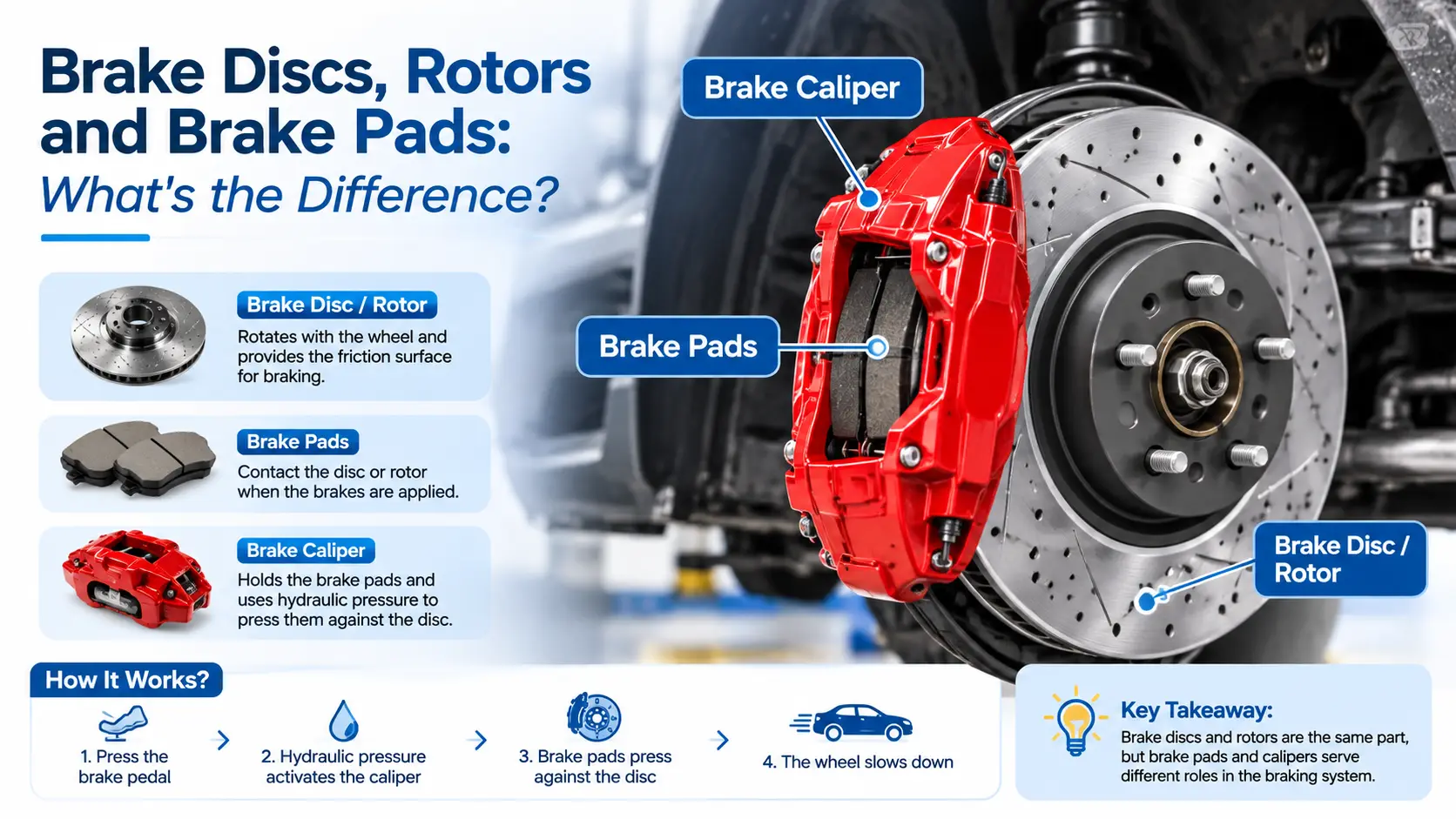
Brake discs and brake rotors are two names for the same part. Brake pads and brake calipers, however, perform different functions.
Here is how these components work together in a disc brake system.
- Brake disc or brake rotor: The disc rotates with the wheel and provides the friction surface for braking.
- Brake pads: These contain friction material that contacts the disc or rotor when the brakes are applied.
- Brake calipers: The caliper houses the brake pads and uses hydraulic pressure to press them against the rotor.
When the driver presses the brake pedal, hydraulic pressure activates the caliper pistons. The pistons push the brake pads against the rotating disc, generating friction that slows the wheel. This process converts the vehicle's kinetic energy into heat.
The brake pads gradually wear as they are used. The brake discs or rotors also experience wear and must be inspected to determine whether they can remain in service or need replacement.
Understanding these differences is useful when reading repair estimates or ordering replacement brake components. A quote for brake pads does not necessarily include new rotors, and a rotor replacement is a separate part of the repair unless otherwise specified.
Why Are Brake Discs Also Called Rotors?
The terms “brake disc” and “brake rotor” describe the same basic component from different naming conventions. Both refer to the disc that rotates with the wheel and works with the brake pads to produce friction.
The terminology can vary by region, manufacturer, and parts catalog. For example, a supplier may list a product as a brake disc, while a repair guide or retailer may call the same type of component a brake rotor.
When comparing products, it is therefore more useful to check the part specifications and vehicle compatibility than to assume that the two terms describe different components.
However, terminology alone does not confirm that two products are equivalent. Brake rotors can differ in diameter, thickness, construction, mounting dimensions, and other application-specific specifications. Always verify the exact part required for the vehicle.
Are Front and Rear Brake Rotors the Same?
Not necessarily. Front and rear brake rotors may differ in size, thickness, design, and mounting specifications, even when they are fitted to the same vehicle.
These differences depend on the vehicle's braking system and original equipment design. Some vehicles use different rotor designs on the front and rear axles, while others may use similar designs with different specifications.
Before ordering replacement brake discs, check the following information:
- Vehicle application: Confirm the make, model, model year, and relevant trim or configuration.
- Original equipment part number: Use the OE number or a reliable vehicle fitment reference when available.
- Rotor dimensions: Check the specified outer diameter and thickness, along with other required measurements.
- Mounting and brake system compatibility: Confirm that the replacement matches the hub, mounting arrangement, and brake system.
Do not assume that a front rotor will fit the rear axle, or that two rotors with similar appearances are interchangeable. When fitment information is unclear, confirm the specifications with a qualified parts supplier or technician.
What Are the Main Types of Brake Discs and Rotors?
Brake discs and rotors are available in different designs. The appropriate type depends on the vehicle's original specifications, braking requirements, and intended use.
Solid Brake Discs
Solid brake discs have a single, solid section between their two friction faces rather than internal ventilation channels. They are used in applications where this construction meets the vehicle's braking and thermal requirements, including some rear brake systems.
Vented Brake Discs
Vented brake discs have internal passages between the two friction faces. As the disc rotates, these passages help dissipate heat. Vented designs are commonly used where greater heat management is required, including many front brake applications.
Drilled Brake Discs
Drilled brake discs have holes through the friction surface. Their performance depends on the overall design, materials, and intended application. Drilled rotors should not automatically be considered better than solid or vented alternatives for every vehicle or driving condition.
Slotted Brake Discs
Slotted brake discs have grooves machined into their friction surfaces. These grooves can help manage debris and friction-surface conditions, depending on the design and operating environment.
Drilled and slotted features are not necessarily mutually exclusive. A rotor may incorporate both features, and some designs combine them with internal ventilation.
For a standard replacement, the vehicle manufacturer's specifications and the requirements of the existing brake system should take priority over choosing a rotor based only on its appearance.
How Do You Choose the Correct Replacement Brake Discs?
Once you know that brake discs and rotors generally refer to the same component, the next step is finding a replacement that matches the vehicle.
1. Confirm the vehicle application
Start with the vehicle make, model, model year, and applicable trim or configuration. Similar vehicles can use different braking components, so the model name alone may not be enough to establish fitment.
2. Check the part number and dimensions
Compare the replacement with the original equipment reference when available. Confirm the required diameter, thickness, mounting dimensions, and other specifications listed for that application
3. Match the rotor design to the braking system
Determine whether the vehicle requires a solid, vented, or another specified rotor design. Do not substitute a different construction solely because it appears to offer better cooling or a sportier appearance.
4. Verify the replacement before installation
Check the part number and specifications against reliable fitment information. The replacement should meet the vehicle's requirements, including any applicable minimum thickness or other service specifications.
For businesses sourcing brake components in bulk, consistent specifications and reliable fitment information are also important when comparing suppliers and managing replacement orders.
Frontech Brake offers a range of brake discs for different automotive applications. Buyers can review the available product information and contact the supplier to confirm the specifications required for their vehicles.
Frequently Asked Questions
Are brake discs and rotors interchangeable terms?
Yes. In automotive disc brake systems, “brake disc” and “brake rotor” generally refer to the same component. The terminology may vary by region or parts catalog, but both describe the rotating disc contacted by the brake pads.
Are brake rotors and brake pads the same thing?
No. Brake rotors are the rotating discs that provide the friction surfaces, while brake pads contain the friction material that presses against those surfaces. Both components work with the brake caliper to slow the vehicle.
Do front and rear brake rotors need to be the same?
No. Front and rear rotors may have different dimensions, designs, and specifications. Replacement parts must match the requirements of the relevant axle and vehicle application.
Can I replace a brake disc with any brake rotor?
No. Although the terms usually describe the same type of component, not every rotor fits every vehicle. Check the vehicle application, part number, dimensions, mounting specifications, and brake system compatibility before purchasing a replacement.
Frontech Brake: Your Trusted Supplier
As a leading manufacturer and supplier of auto parts, Frontech is committed to delivering reliable and high-quality brake discs and rotors. Our years of expertise and dedication to customer satisfaction have made us a trusted brand in the automotive industry. Whether you're a car enthusiast looking for superior performance or a professional seeking dependable OEM replacements, Frontech Brake has the right solution for your braking needs. With a vast range of brake discs and rotors to fit various vehicle makes and models, we strive to provide nothing less than excellence in every product we offer.
In conclusion, while brake discs and rotors are often used interchangeably, they refer to same parts within the braking system. Frontech Brake, your trusted source for high-quality auto components, is here to provide you with the best brake discs and rotors that meet industry standards, ensuring your safety and driving satisfaction.
Conclusion
In conclusion, I hope this article has shed some light on the common confusion between brake discs and rotors. While these terms are often used interchangeably, it is important to understand that they refer to the same component of a vehicle's braking system. Brake discs, also known as rotors, play a critical role in slowing down or stopping a vehicle by applying friction to the brake pads. Whether you're a car enthusiast or simply a curious individual, knowing the proper terminology can help enhance your understanding of automotive mechanics. So, the next time you're discussing braking systems, feel confident in using the terms "brake discs" and "rotors" interchangeably, knowing that you are referring to the same essential part of a vehicle's safety system.
Table of Contents
GET IN TOUCH WITH Us
Frontech brake pads supplier was established in 2002. It integrates R&D, design, manufacturing and sales, focusing on automotive braking systems.
Domestic Factory
Address: F4-504, Optics Valley Future City, Dongwu Road, Dongying City, Shandong Province, China
Quick Links
Products
Contact Us
Contact person: Wang
WhatsApp & Tel: +86 191 5460 8822
Russian Agent Line: www.frontech-rus.ru
Email: salesteam@frontech.com